Empirical analysis of determinants of coca leaf consumption behavior in Bolivia period 2006 – 2021
ABSTRACT: This study consolidates knowledge about the determinants of coca leaf consumption in Bolivia. Applying conditional pooled models combined with Machine Learning techniques, use the Household Surveys available at the Bolivian INE. There are two populations at risk of becoming a long-term structural well-being problem indigenous peasant native nations and peoples, and those who are in extreme poverty. The compensatory effect appears by substituting goods from the basic food basket for coca leaves, which disappears when they have higher educational levels and better income. Smoking and drinking alcohol behave as complementary goods.
KEYWORDS: The economy of indigenous peoples, Consumption of coca leaves, Probit Models, Oprobit Models, Machine Learning.
JEL Classification: B23, I12, Q59, N5
DOI: https://doi.org/10.7201/earn.2023.01.04
The original research paper is written in Spanish, which may pose a challenge for English-speaking readers. To address this issue, I have provided a detailed summary of the study's main findings in English. However, I encourage readers to refer to the original research paper for a more comprehensive understanding of the topic, including access to data tables, graphs, and results.
By presenting the key results of the study in this blog post, readers can draw their own conclusions and consider the implications of addressing the underlying socioeconomic issues driving coca leaf consumption in Bolivia. This post aims to bridge the language gap and enable English-speaking readers to engage with the topic. Additionally, readers have the option to access the original research paper for a more in-depth analysis of the study.
What are the main determinants of coca leaf consumption in Bolivia according to this study?
The study investigated the determinants of coca leaf consumption in Bolivia and found that poverty and belonging to an indigenous peasant nation or people are the main factors driving coca leaf consumption. The study also found that the compensatory effect of substituting goods from the basic food basket for coca leaves disappears as individuals attain higher levels of education and income. Additionally, the study found that smoking and drinking alcohol are complementary goods to coca leaf consumption.
To obtain more accurate results, the study used machine learning techniques, including multiple correspondence analysis (MCA) and an ordered probit model. By using MCA, the study was able to better interpret the results of the consumption frequency model, and the ordered probit model allowed the study to capture the frequency of consumption with four alternatives, resulting in 624 outcomes.
How is the consumption of coca leaves related to poverty and education in Bolivia?
Overall, the study suggests that addressing poverty and improving education and income levels could help reduce coca leaf consumption in Bolivia. The study also suggests that addressing smoking and alcohol consumption could also help reduce coca leaf consumption.
Readers are encouraged to consult the original research paper for a more comprehensive understanding of the topic.
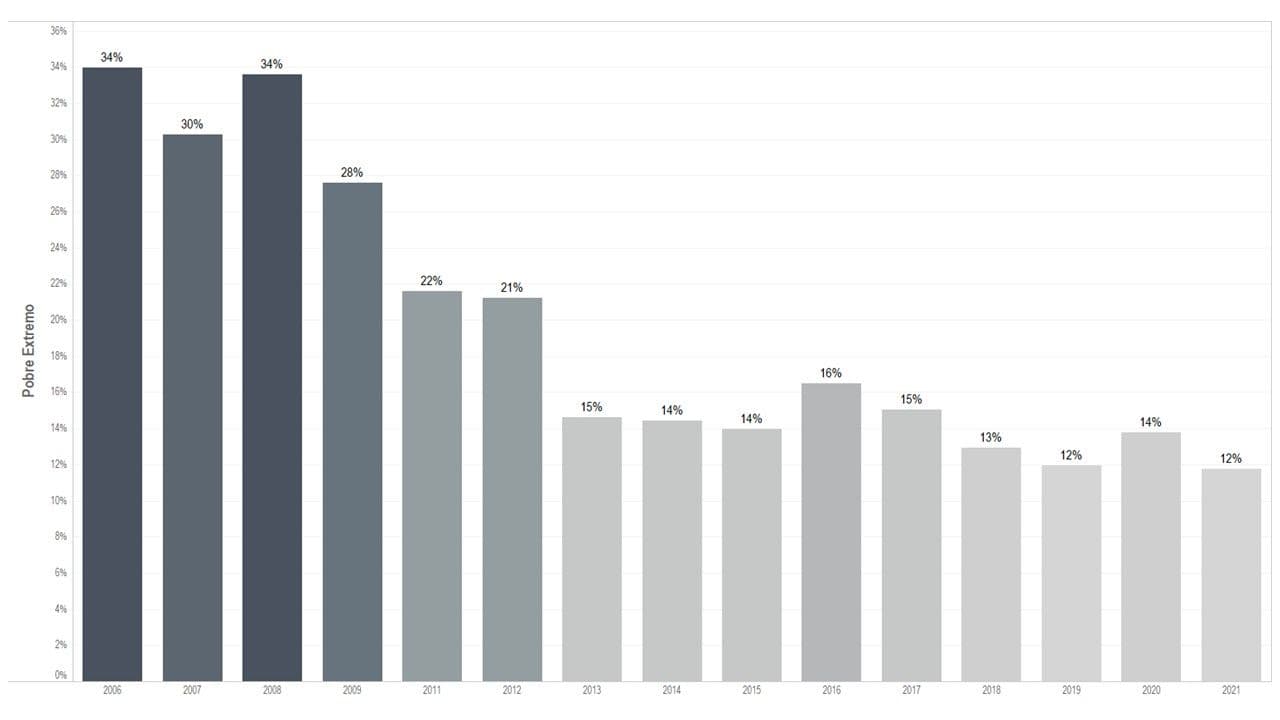
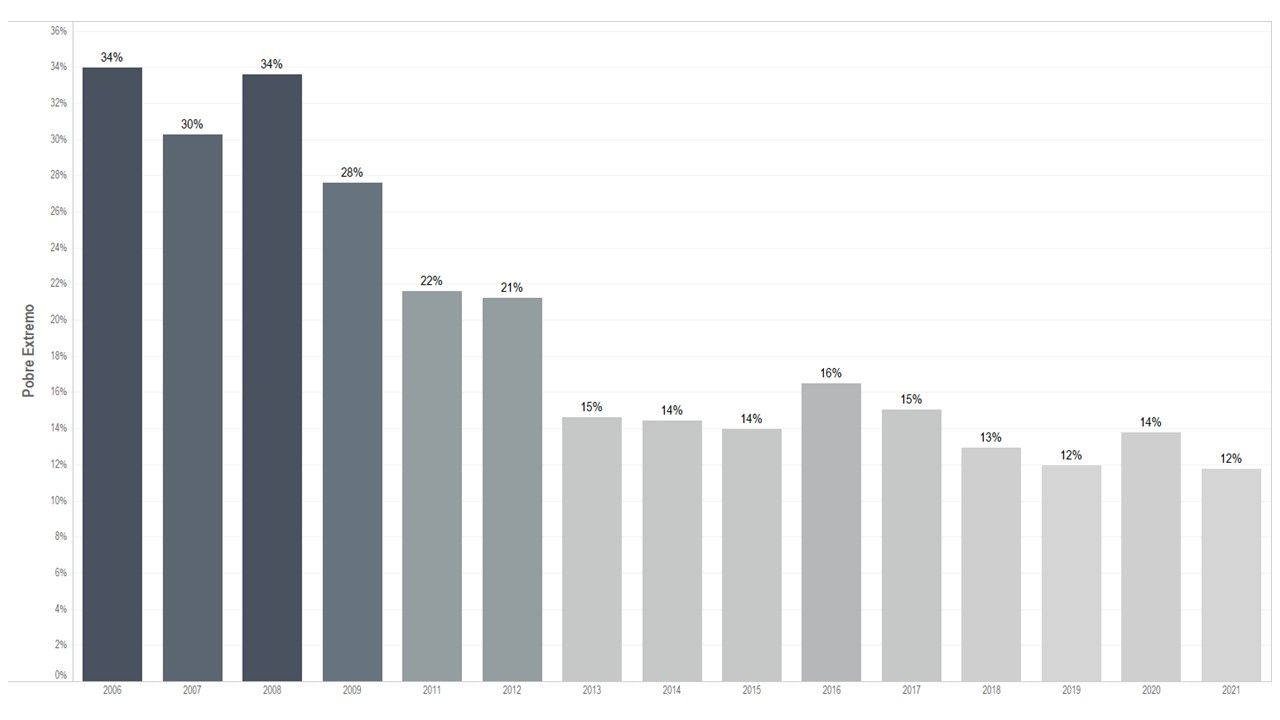
Extreme poverty in Bolivia 2006-2021
Individual consumption of coca leaves in Bolivia 2006-2021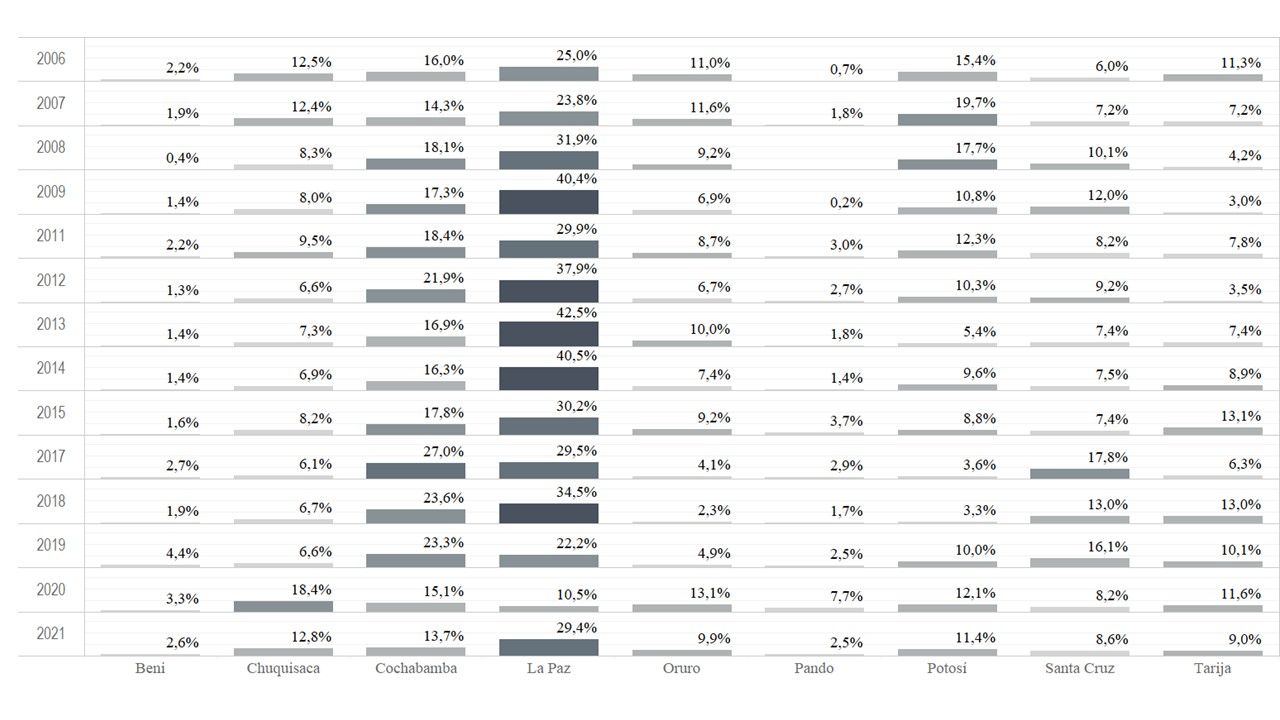
What machine learning techniques were used in this study and how did they help to get more accurate results?
This study used a machine learning technique called multiple correspondence analysis (MCA) to help normalize and better interpret the results of the consumption frequency model. MCA is a statistical technique used to analyze the relationship between two or more categorical variables. The explanatory variables of interest were synthesized into five components, and the correlation matrix of the components revealed a significant presence of oblique correlation, indicating the application of oblimin rotation with eigenvalues greater than 1. The Kaiser-Meyer-Olkin measure of sampling adequacy reported a confidence level of 69%. The study also used an ordered probit model to capture the frequency of consumption with four alternatives, resulting in 624 outcomes. Machine learning techniques helped to normalize and better interpret the results of the ordered probit model, making it easier to understand the behavior of the groups of interest. By using machine learning techniques, the study was able to obtain more accurate results and better understand the determinants of coca leaf consumption in Bolivia.
Percentage of coca leaf consumption by monthly income level in US dollars,
per year present in the Household Surveys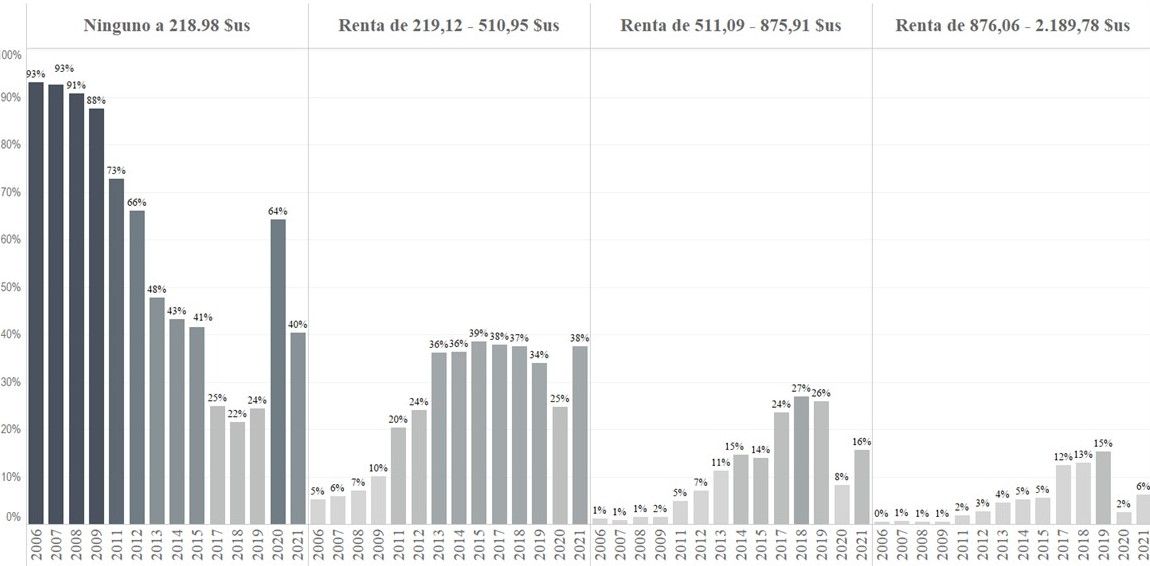
What are the most relevant results?
As per the study, the key findings are as follows:
Firstly, poverty and belonging to an indigenous peasant nation or people are the primary determinants of coca leaf consumption in Bolivia. The study suggests that individuals in extreme poverty and those who identify as indigenous peasants are at a higher risk of developing long-term structural well-being problems and are more likely to consume coca leaves.
Secondly, the compensatory effect of substituting goods from the basic food basket for coca leaves diminishes as individuals attain higher levels of education and income. This implies that education and income play a crucial role in reducing coca leaf consumption in Bolivia.
Lastly, smoking and alcohol consumption act as complementary goods to coca leaf consumption. Therefore, addressing smoking and alcohol consumption could also contribute to reducing coca leaf consumption.
These findings underscore the need to address poverty and improve education and income levels in Bolivia, which could help curb coca leaf consumption. Additionally, addressing smoking and alcohol consumption could also have a positive impact on reducing coca leaf consumption. Readers are encouraged to refer to the original research paper for a more in-depth analysis of the topic.
What is the most important conclusion of this article?
The study reveals that individuals who are extremely impoverished and belong to an indigenous peasant nation or people are more likely to have long-term structural well-being problems and consume coca leaves. Furthermore, the study indicates that the compensatory effect of substituting goods from the basic food basket for coca leaves diminishes as individuals attain higher education and income levels. These findings highlight the significance of addressing poverty and improving education and income levels to mitigate coca leaf consumption in Bolivia.
In conclusion, I encourage readers to draw their own conclusions based on the study's findings. The original research paper provides a comprehensive analysis of the topic, including data tables, graphs, and results.
Juan Marcelo Gutierrez Miranda
Limpieza de una Base de Datos con R
Ejemplo práctico de limpieza de datos con R y tidyverse usando datos de ventas de propiedades de NYC. Incluye carga, limpieza, combinación de datasets, regresión lineal y errores robustos.
Z-score
Z-scores are an essential tool in the world of statistics and data analysis. They can help you measure how far or close your observations (or data points) are from the mean.

¿Necesitas resolver algo parecido?
Modelización cuantitativa, validación de modelos y data leadership. Trabajo bajo NDA si lo pides.
Háblame de tu proyecto →